
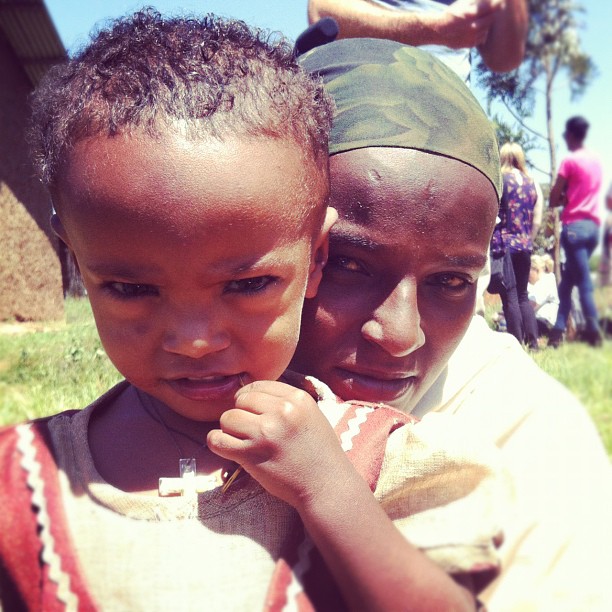
When I walked into the woman’s house, made of branches, mud and straw, I was surprised to look to my right just inside the door and see three sheep.

Meeting the sheep
They were standing placidly, divided from the rest of the front room by a sheet of plastic held in place by wooden posts. On the other side of the room, a trough ran along the wall, filled with straw for them to eat.
They looked at me. I looked at them. I took their picture, they peered out the front door to see who else might be stopping by for a visit.

The cooking area in the home
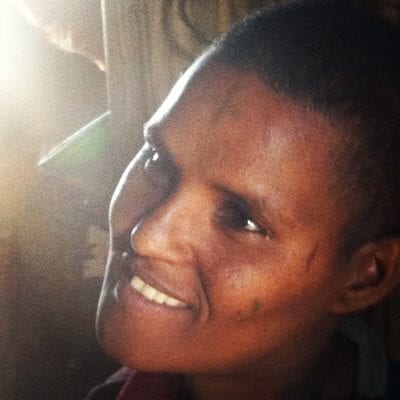
The mother talking about her happiness at receiving 3 sheep
The back room of the two-room house contained a bed, an area for cooking and hard-packed dirt floor. The mother carried her 4-month-old baby on her back — her other two children are at school.
We were visiting Achefer Woreda, a region about an hour outside of Bahir Dar in northwestern Ethiopia. This woman got her sheep about a month ago as part of a USAID-funded programme to help farmers; it supplies livestock and seed as well as farming education in remote villages like this one. The local farming training centre has introduced new vegetables such as beetroot, swiss chard and carrots and also provides seeds for cabbage — which is eaten a lot — onions, garlic, mango, avocado and papaya. At cooking demonstrations, local mothers learn how to cook and eat the new vegetables in a way that preserves the most nutrients.
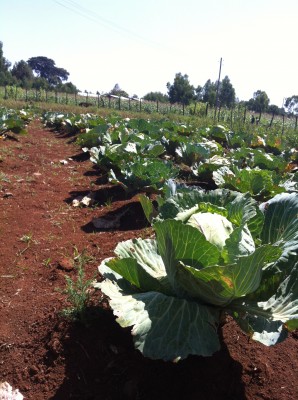
Cabbages at the farmers' training centre
Poor nutrition and stunting is a problem here. (We tower over most of these women.) To be eligible for the programme, the women have to have children under age 5, be among the most needy and have a strong ambition to take part.
When this mother’s ewes have lambs, she’ll sell or eat the male ones (meat is only eaten on holy days or special occasions). She’ll keep the female lambs to grow her herd.
We spent an enlightening morning hearing about this project in a village that was all mud huts on dirt roads. We sat down with a group of women like this mother who are starting out with 3 sheep. They had their young children with them, all of whom wanted to touch our hands or get their pictures taken.
They loved being photographed, then looking at the pictures on the screen. The mothers beamed with pride when their little ones stood still for pictures, smiled, said hello or shook our hands. This intimate moment was a highlight of the trip, along with the short walk to visit the house. (Other little children, spotting us, started trailing after us, until we looked like a small female group of pied pipers.)

One woman poses with her daughter during our chat
The hope of many of the women is eventually to be able to farm cattle, and with each expansion, they improve the lives of their children and themselves. It was a surprise to see how modestly these women and their children lived, but I left feeling energised by their optimism and obvious faith.
Most of all, they said their dream for their children is to have better food. They wanted to know how we could help. With #ONEMums and #ONEMoms, we’re raising awareness of the importance of foreign aid and encouraging the UK to stand by it’s promises to give pledged amounts. Join the movement by signing up at ONE now, and tweeting, Facebooking or Google+’ing the #ONEMums hash tag.

The cooking demonstration in the village
I’m traveling in Ethiopa at the kind invitation and expense of The ONE Campaign, a nonpartisan, advocacy organization dedicated to the fight against extreme poverty and preventable disease, particularly in Africa. ONE works to convince governments (the UK, as well as others) to invest in smart programs that help to eliminate poverty and preventable disease in a sustainable way. I’m here to highlight the images and success stories of how the organizations for which ONE advocates are effecting real change in Ethiopia. If you’re moved by anything you read here and you’d like to help, please consider adding your voice and join ONE via the link above. Your information will remain confidential, I promise. And if you’re already a member, and would still like to help, I’d love if you’d spread the word by sharing this post with your friends and followers.

About Jennifer Howze
Jennifer Howze is the Creative Director and co-founder of BritMums. She blogs about family travel at Jenography.net, tweets at @JHowze and Instagrams at @JHowze. Previously, she wrote the Alpha Mummy blog at The Times and as a journalist has contributed to The Times, The Guardian, The Independent, The Wall Street Journal, Travel & Leisure, Budget Travel, CNN.com, Allure, SELF and Premiere, among others. She won The Maggie Award from the Planned Parenthood Federation of America for a health article in Seventeen magazine.
ONE | You make a difference. Believe it.
Monday 29th of October 2012
[...] Jennifer Howze, Brit Mums / Farming and Cooking in Ethiopia [...]
ONE | #ONEMums: Farming and cooking in Ethiopia
Monday 15th of October 2012
[...] Jennifer Howze traveled to Ethiopia with ONE this October. This piece, originally published on Brit Mums Blog, is part of our ongoing coverage of the [...]
Michelle Twin Mum
Saturday 13th of October 2012
Pied pipers, yes it was exactly like that, lovely Jen x
Jennifer Howze
Saturday 13th of October 2012
It was amazing wasn't it? They were all so curious about why these white folk had come to visit. Apparently 2 of the local men who saw Karen, a black American blogger and photographer who looks quite Ethiopian, kept saying, "Look! She's American and she's black!"