

I spent a week in Ethiopia with the ONE organisation, seeing the worthwhile programmes funded by foreign aid and meeting people who are the new face of Ethiopia. Scroll down the bottom of the piece for information on what you can do and how to get involved.
On Saturday we visited another scarf factory back in Addis Ababa. It might seem strange that we’ve visited 2 different scarf factories on our trip here with ONE. The first one we visited was a charity helping women learn skills, earn money and get out of prostitution.
This one is very different. Muya is a for-profit enterprise that’s certified Fair Trade. It pays the workers a living wage (about $100 US a month); allows employees to work when they want as long as they meet their quotas, fitting it in around family obligations and holy festivals; and emphasizing skilled crafts rather than cheap labour for items sold cheaply. The grounds are planted with trees and flowers. It could be a modest hotel rather than a “factory”.
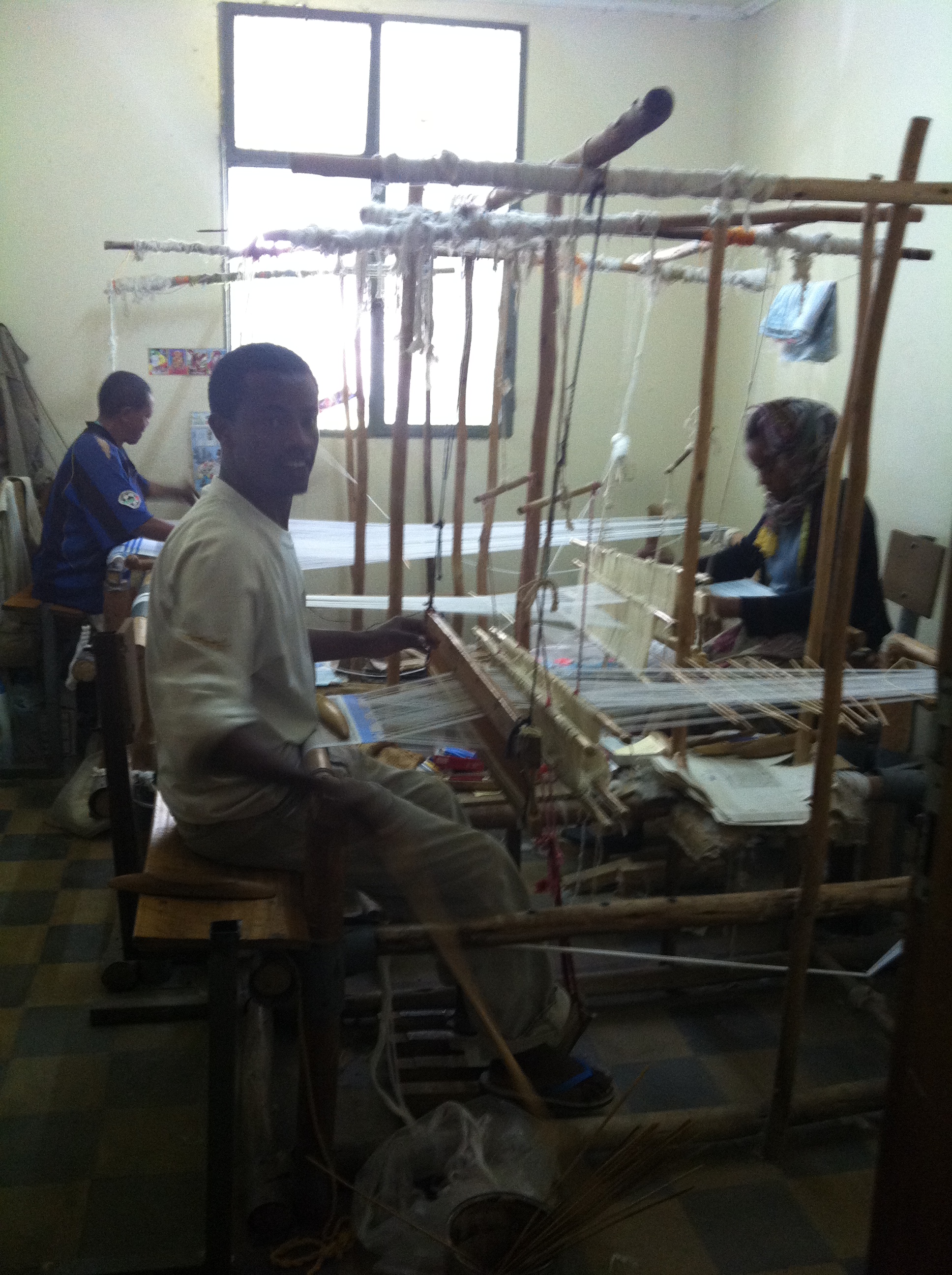
Solomon, front, a master weaver at Muya
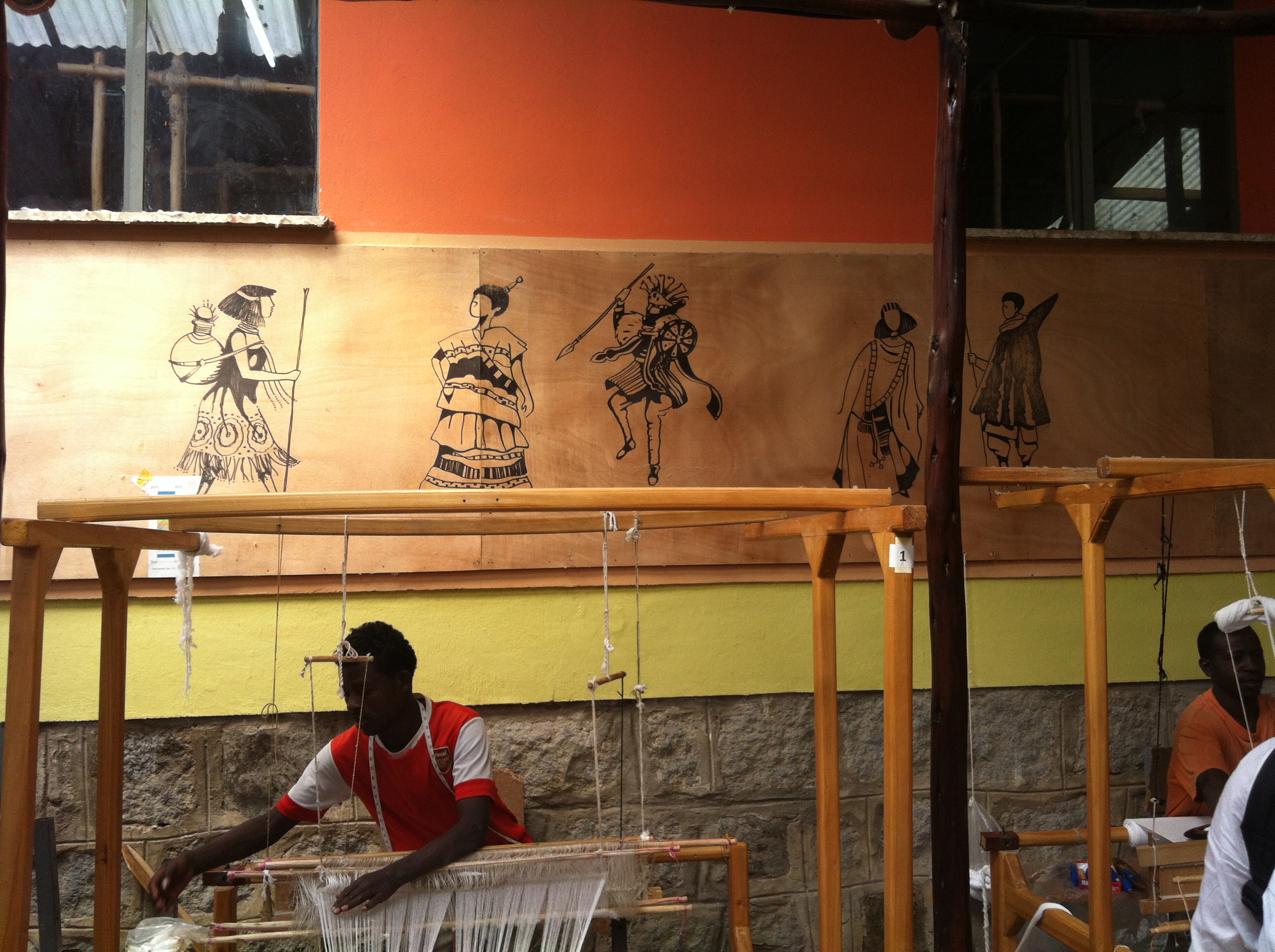
Weaver at Muya
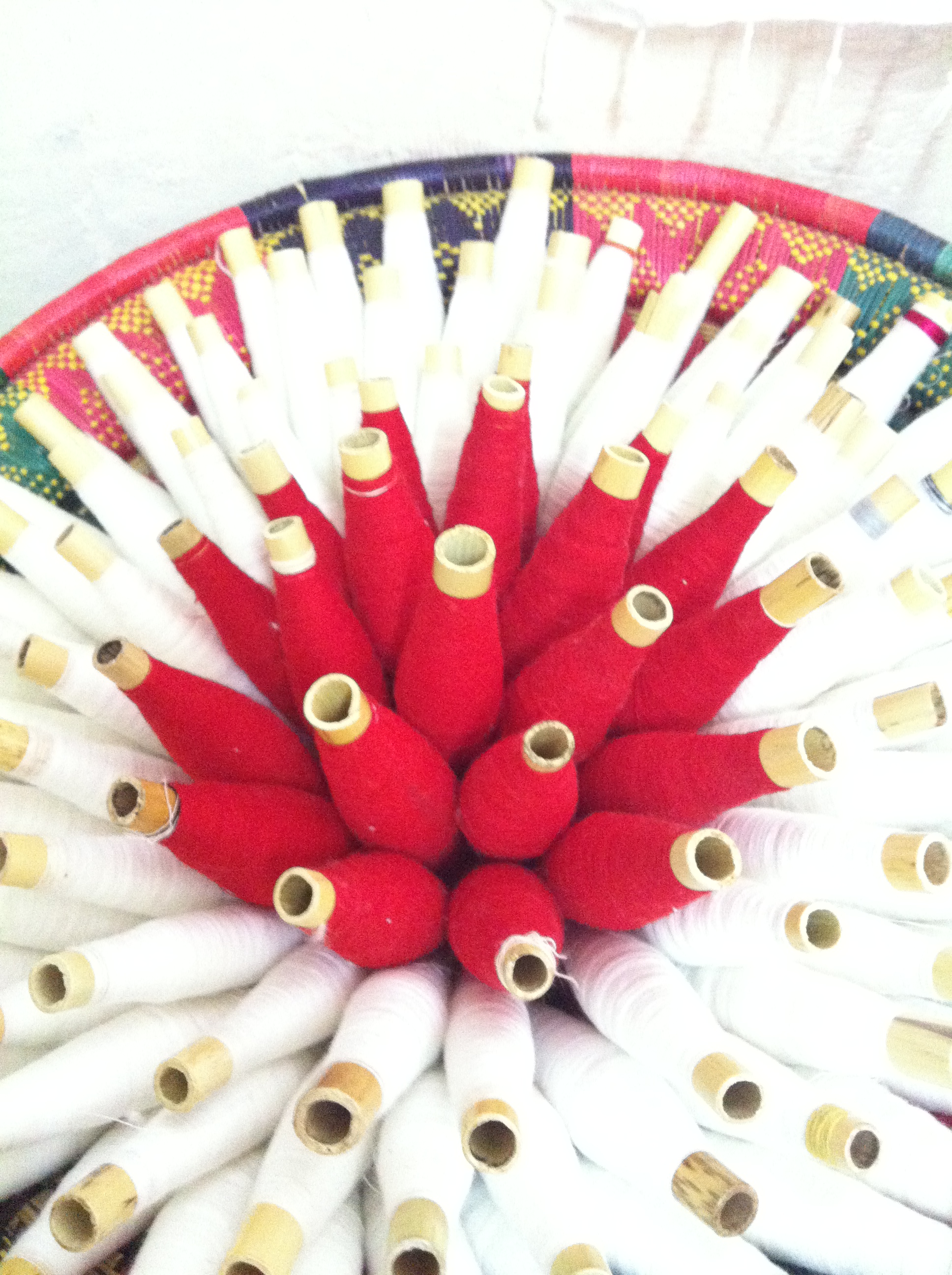
Spools of thread
“Through design and creativity, we want to bring it to new markets,” says Jacques Dubois, part owner who’s lived in Ethiopia for 44 years. That’s why they focus on selling via J Crew, the trendy American clothier, and others like it.
We’re touring this factory to see what modern Ethiopia production and commerce can look like. Here’s what it looks like.
The general manager tells us a story of attending a trade fair displaying her fabrics. A buyer for a big hotel chain saw them, loved them and they went back to the manager’s room to place and order and negotiate the contract. When they went back to the fair to finalise it all, the buyer saw the “Made in Ethiopia” sign and got cold feet.
After all, we know all about Ethiopia, right? Starvation. Poverty. How would she even pay for the goods. They lost the sell.
This is what stymies so many in Ethiopia: our image of the country is stuck in a groove. It’s up to us to understand that the country has moved on – and to spread the word. That Ethiopia has artisans and creative talent and thriving businesses with goods that we want to buy in the UK and the US.
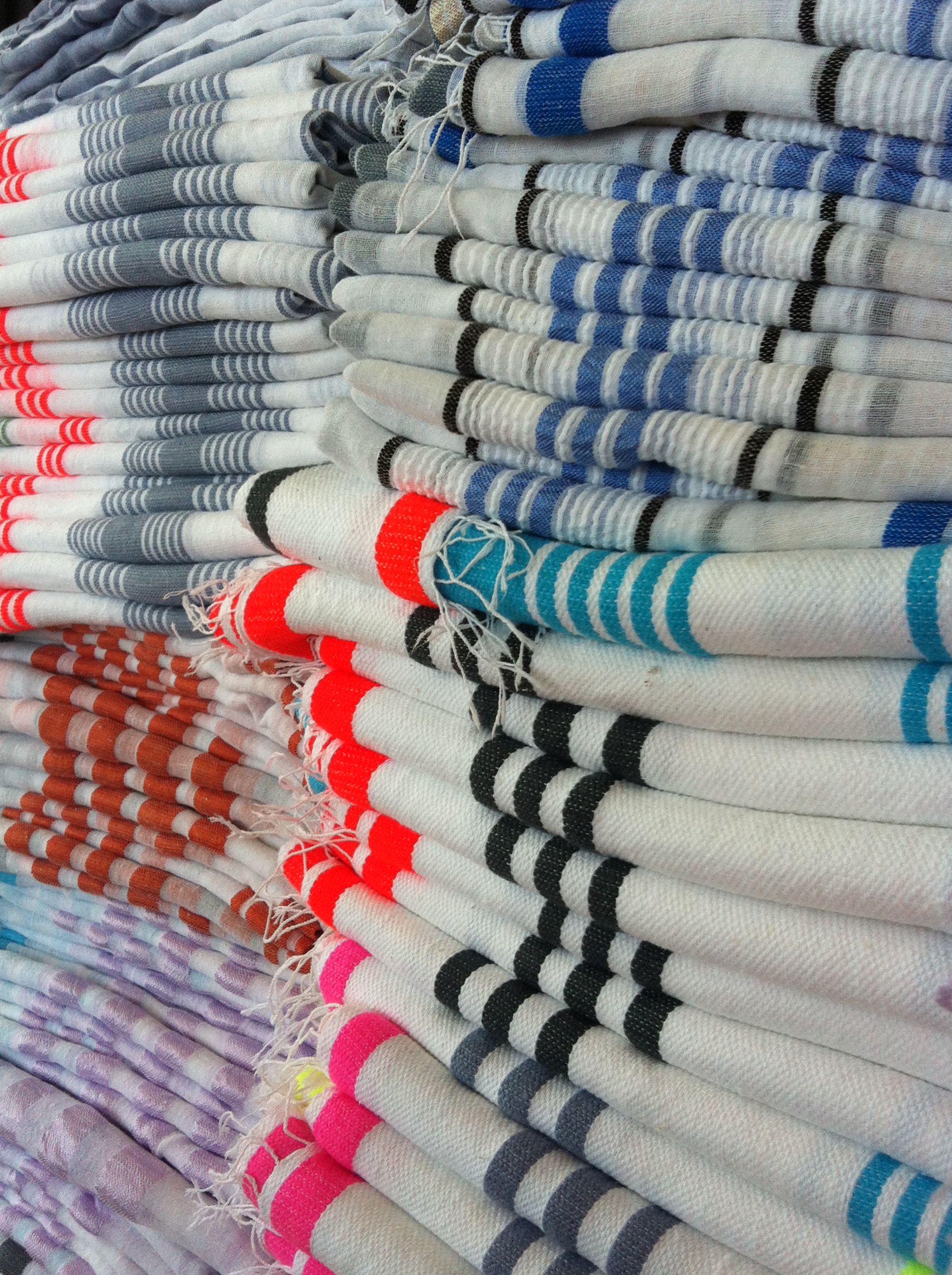
Muya scarves
The business also produces pottery, a dying trade in the country. Most of these woman used to make simple water jugs – something that has been supplanted by plastic jerry cans because they are lighter, easier to clean and don’t break. Potters are a very lowly profession here, along with blacksmiths, because they work with fire, which is associated with the devil. Muya has trained them in making decorative pottery (something new in this part of the world) and has even had a sculptor come work with them.

Potter making a guinea hen decorative piece
I left feeling, “Hell, yeah! Why isn’t Ethiopia cotton or Ethiopian scarves considered a mark of quality, like Egyptian cotton or Colombian coffee beans, both produced from nations that have their own issues with poverty.
Sounds great! But how can I support it? I hear you say.
Well, you can’t buy Muya scarves online yet. But there are ways to make business easier for companies like Muya, that provide high-quality goods and jobs.
Here’s how:
- Tweet, comment, share on Facebook or Google+ this post, to help change the attitudes of your followers
- Join ONEMums to add your voice to others urging the government to maintain its financial aid and advantageous trade rules with Ethiopia. Sign up to join here.
- Post or write about the changing face of Ethiopia yourself!
This is about collectively using our voice to ensure our governments remain focussed on living up to their foreign aid pledges in countries like Ethiopia.
ONE is not a charity. It will never ask for you money – only your voice.
I’m traveling in Ethiopia at the kind invitation and expense of The ONE Campaign, a nonpartisan, advocacy organization dedicated to the fight against extreme poverty and preventable disease, particularly in Africa. ONE works to convince governments (the UK, as well as others) to invest in smart programs that help to eliminate poverty and preventable disease in a sustainable way. I’m here to highlight the images and success stories of how the organizations for which ONE advocates are effecting real change in Ethiopia. If you’re moved by anything you read here and you’d like to help, please add your voice and join ONE. Your information will remain confidential, I promise. And if you’re already a member, and would still like to help, I’d love if you’d spread the word by sharing this post with your friends and followers.

Me, with one of the Muya workers

About Jennifer Howze
Jennifer Howze is the Creative Director and co-founder of BritMums. She blogs about family travel at Jenography.net, tweets at @JHowze and Instagrams at @JHowze. Previously, she wrote the Alpha Mummy blog at The Times and as a journalist has contributed to The Times, The Guardian, The Independent, The Wall Street Journal, Travel & Leisure, Budget Travel, CNN.com, Allure, SELF and Premiere, among others. She won The Maggie Award from the Planned Parenthood Federation of America for a health article in Seventeen magazine.
michelle twin mum
Wednesday 17th of October 2012
Super post Jen, that story of the lost sale broke my heart. Mich x
Kirstie
Monday 15th of October 2012
I missed your series of posts as I was away last week and just catching up with them now. This is interesting stuff and I'm sure Ethiopia isn't the only country being held back by out of date prejudices and old news. I'm probably as much to blame as the next person and you've made me think...
maggy, red ted art
Monday 15th of October 2012
Oh my goodness, how disheartening to loose the sale because of the "Made in Ethiopia" label. Your trip is so valuable in helping change mindsets and perceptions (mine at the very least!).
Maggy
ONE | #ONEMums: What an Ethiopian Fair Trade factory looks
Monday 15th of October 2012
[...] Jennifer Howze traveled to Ethiopia with ONE this October. This piece, originally published on Brit Mums Blog, is part of our ongoing coverage of the [...]