
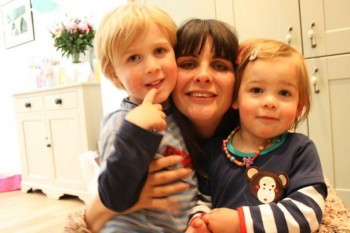
 Victoria Lindop is a mummy to two young children she is also Corporate Partnerships Director for UNICEF UK today she has a very clear message to get across saving children’s lives by improving their sanitation facilities, the word to Victoria
I am a mum of a three year old girl and a five year old boy. They are the two most precious things in the world to me. As soon as they came into my life, all I wanted to do was to protect them from harm and give them the best possible start in this world.
My worst nightmare, which I imagine is probably the same for most mums, is the thought of one of my children falling ill and suffering. From the moment they were born I have felt a massive responsibility to look after their health, making sure they eat the right food and practice good hygiene habits such as washing their hands after going to the toilet.
I have been working at UNICEF, the world’s leading organisation for children, for the past eight years and I feel that this experience has only made my instinct to protect them even stronger. Through my job I have been lucky enough to travel across the world to witness how UNICEF is working to give many of the world’s most vulnerable children a better life.
Most recently I travelled to Liberia, a country in West Africa that lies in between Cote d’Ivoire and Sierra Leone, to see how UNICEF is working for children in a country still recovering from a vicious civil war that only ended in 2003.
Liberia has a population of 4 million people. It is one of the most challenging countries on earth for a child to grow up in, with child infant mortality rates particularly high.
In Liberia children are at real risk from illness and disease because of a lack of proper sanitation facilities and knowledge about hygienic practices. A lack of knowledge about the danger of open defecation and the harm it can cause to children makes the situation even worse.
I saw this in evidence throughout my visit. Large parts of Liberia face grinding poverty, with children playing in open latrines alongside people going to the toilet, it really shocked me.
For these children, just a few of the 2.5 billion across the world who don’t have access to a proper toilet or knowledge about hygienic practices, bad sanitation isn’t about comfort or privacy. It can mean the difference between life and death. Everyday 3,000 children die from diarrhoea, almost always as a result of bad sanitation. It shouldn’t be like this.
To address this, UNICEF is working in countries and communities most in need, including Liberia, and implementing our innovative ‘Community led Approaches to Sanitation’ programme (CATS).
In Liberia as in other countries where sanitation remains a life and death issue, educating the community and affecting behavioural change is as much of an important part of the programme as building toilets. UNICEF focuses on teaching young people about the importance of hygienic practices so they can act as the drivers of change in their communities. These young people are not afraid to talk about toilets – they know that, by doing so, they can help save children’s lives.
But UNICEF cannot do this alone.
In my role as Corporate Partnerships Director at UNICEF UK, my team and I are responsible for engaging and working with global businesses to set up and manage partnerships that will raise money for our vital work and increase crucial awareness of the issues that affect children across the world.
In July we launched a partnership with The Unilever Foundation and Domestos which, through its support of our CATS programmes, will help an estimated 400,000 people live in open defecation free communities across nine countries; Gambia, Ghana, Nicaragua, Nigeria, Pakistan, Philippines, South Sudan, Sudan and Vietnam.
As part of this partnership, Domestos is contributing 5% of its average proceeds from the sale of specially marked bottles sold in Sainsbury’s to UNICEF’s CATS programmes in two of these countries; South Sudan and Vietnam. They are two of the countries that have the worst rates of access to proper sanitation facilities in the world.
Thanks to the support of Domestos and that of their customers, UNICEF will be able to reach thousands more children in these two countries to help protect them from illness and disease caused by poor sanitation.
My trip to Liberia was both shocking and eye-opening and I don’t think the images of children living in and among filthy, dangerous water will ever leave me. I found them even more shocking being a mum myself, but it also illustrated just how important the work of UNICEF is in providing sanitation facilities and changing community habits. Its not an overstatement to say that it will save children’s lives, and make a huge difference to whole communities.
Until the end of September, you can make a difference too. Please visit www.domestosforunicef.com to find out how and help us make sure thousands more children can use a life-saving essential item, a toilet.
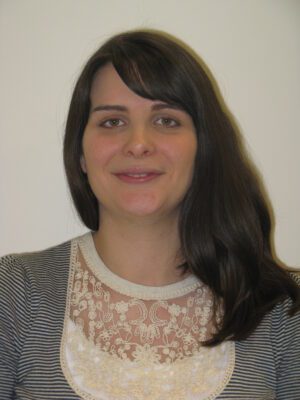 VICTORIA LINDOP – HEAD OF CORPORATE PARTNERSHIPS, UNICEF UK
Victoria has been at UNICEF UK for eight years and is currently Head of the Corporate Partnerships Team. Prior to that she headed up the Partnership Development function within the team and has also worked in New Business. Victoria has worked on a large number of international partnerships including Barclays, BT, P&G, M&S, Orange, Starwood Hotels, British Airways & IKEA. Victoria has also worked at the British Heart Foundation, Asthma UK & Action on Addiction in both Corporate & Events functions.

About
BritMums is the UK’s original collective of lifestyle bloggers and digital influencers, fueling the country’s most influential social content. We lead the online conversation with members who are parent social influencers creating content on topics ranging from food, parenting, travel, politics, style and more.