
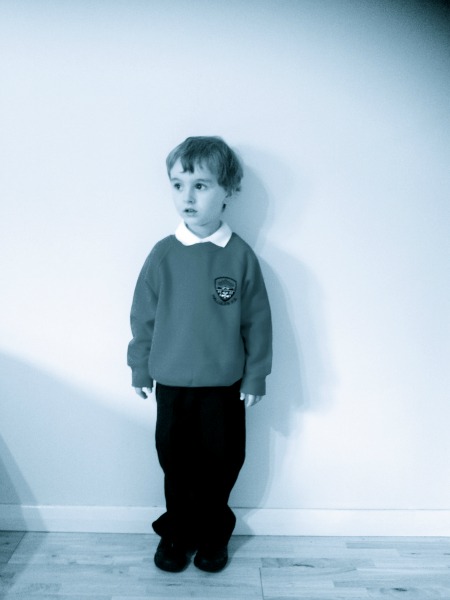
Parents’ evenings can bring many things to light as Stephanie Arsoska found when she discovered her son would not speak to any adult outside the family home. She shares her story how selective mutism came into her life.
I always knew my son was shy. I hoped that in time he would become more confident but I did not feel too concerned. His key worker at nursery described him as a quiet but clever boy and I was sure that in time he would find his feet and his voice.
I was wrong.
Things quickly unravelled for my son when he started Primary School. He had been anxious about the move but he liked his teacher and I was hopeful that he would settle happily. It wasn’t long, however, before his teacher asked to meet with me to discuss concerns over his speech and it was at that meeting that I saw my son as I had never seen him before. Not only would he not speak a word to his teacher but I was distressed to discover that he could not even speak to me in her presence.
I was shocked. My son was a chatterbox at home, he had a good vocabulary and was certainly far quiet around the house. How could it be that now, with me right beside him, he could not utter a single sound? He couldn’t even shake or nod his head as I asked him questions in front of his teacher. He just looked at me, his eyes anxious, face frozen.
It soon became clear that my son could not talk to other adults outside the home. What ever was going on for him was more than just shyness but I didn’t know how to help him. It was another mother who suggested Selective Mutism, a condition I had not heard of before, but when I read the diagnostic criteria I could see a description of my boy.
My GP was kind but skeptical, I could sense that she felt I was exaggerating a case of shyness but after assessing my son she confirmed my fear that he was indeed suffering from Selective Mutism.
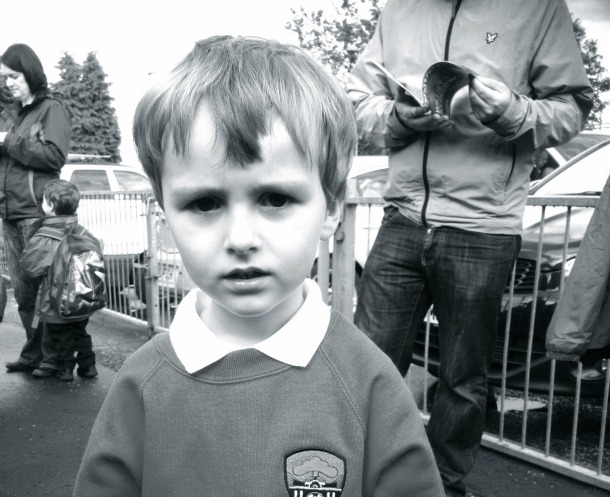
Selective Mutism is not well known condition and yet it is estimated that it effects 6 in every 1000 children. While it might appear as shyness, Selective Mutism is actually an anxiety disorder where children find themselves unable to speak in particular situations. Children may appear shy or rude when in actual fact they are physically unable to talk. Unfortunately due to a lack of understanding around the issue these children often find themselves labeled as disobedient or difficult.
Several months on from his diagnosis my son still does not speak to adults at school. Selective Mutism is treatable and we are using gentle techniques of gradual exposure to situations he finds difficult, but it will be a slow process. In the mean time we try not to refer to his talking at all, instead I write him stories. Stories of children who find themselves locked in world silence just like him and how those children eventually find their voice. I hope that in time we will help him to find his.
You can find information and support at Selective Mutism
 Stephanie blogs at Storybramble where she posts free audio stories and poems for children with follow on creative activities. She is a trained actor, qualified drama teacher and very unqualified mother of her two children aged five and two. Find her on Twitter, Facebook and Google +

About
BritMums is the UK’s original collective of lifestyle bloggers and digital influencers, fueling the country’s most influential social content. We lead the online conversation with members who are parent social influencers creating content on topics ranging from food, parenting, travel, politics, style and more.
Can you give your quiet child creative confidence? | Storybramble
Friday 20th of September 2013
[…] selective mutism. I have written about the experience of discovering his diagnosis over here on BritMum’s. He is an anxious wee boy and as a mother it is heartbreaking to see both his creative potential […]
What happens when you fail as a parent? Storybramble | Storybramble
Thursday 4th of July 2013
[...] in shielding my son from this but I failed. I wrote an article about it here on BritMums – Silence is not always Golden, if you want to read more about our [...]
Stephanie
Thursday 18th of April 2013
There was a feature on Jeremy Vine today on Selective Mutism. You can still listen on iplayer.
Stephanie
Wednesday 17th of April 2013
Stage fright is a good description. You can see his whole face freeze up when it happens. It's very distressing to see. He misses out on a lot - he spends parties glued to my side even though he wants to joint in.
It is very encouraging to hear the stories of those children who have come through the other side of it.
Rachael c
Wednesday 17th of April 2013
Hi mamacook. My daughter was, and still is, quiet and intelligent. We dont want that to change! There were signs all was not quite right eg she would freeze in these situations and be physically unable to speak. It was like the shutters came down and that was it. The first stages of therapy were to encourage non-verbal communication. This took the pressure off a lot, particularly in stressful situations. Then we enforced speaking in situations where she knew the people very well eg at grandparents house. We then had a star chart - her Brave Chart- where she had to complete social activities with a reward on successful completion. We slowly worked on increasing verbalisations in situations where she wasn't so comfortable.