

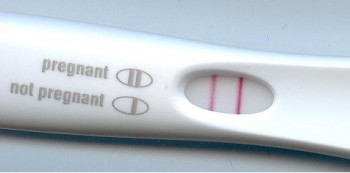
 It’s a feeling like no other when you first see that line spread across the small window on that thin, white plastic stick, or see the words flash up before your eyes. Finding out you’re pregnant is a life-changing event. For many, it’s also a hugely exciting time. I remember when I found out for the very first time that I was expecting a baby, and it’s a memory I’ll never forget. It’s like no other.
But something I can’t begin to imagine is finding out that the baby you (or your partner) is carrying is not going to be born. I’ve been fortunate never to have to experience that pain but I imagine it must be excruciating. I have friends who have had miscarriages – sometimes more than one – and I am amazed at how resilient they have remained, when all they must have wanted to do was crumble.
It’s also amazing to hear how differently women can be treated in different parts of the country. I know some friends who commend the care they received while others who live elsewhere felt they didn’t always get enough information about what was happening or what to expect.
Now, I’m not about to criticise the NHS, it has a very difficult job to do and has so many pressures to deal with. I myself have had some excellent care at the hands of our national health service and feel lucky to have access to free healthcare because so many other people in other parts of the world do not. But, in an ideal world, people wouldn’t have differing stories about the type of care they received. In an ideal world, all people would get the same level of care, eliminating any kind of “postcode lottery”. And this – I hope – is about to happen for women who experience any kind of pain or bleeding in their first trimester of pregnancy.
You may have already seen stories on the news or in the newspapers about this but basically, the National Institute for Health and Clinical Excellence (NICE) has published new guidelines for the NHS on how women who may be having a miscarriage should be cared for. It also covers the care of women who have a suspected ectopic pregnancy, which is another kettle of fish altogether – did you know that signs and symptoms of an ectopic pregnancy can include dizziness or an upset stomach? I didn’t. And of course, if doctors don’t diagnose it early, it can be potentially life threatening. Although it’s rare for a woman to die from a ruptured ectopic pregnancy (there were six between 2006 and 2008), two thirds of those deaths are due to missed or late diagnosis. That’s scary stuff.
Now here’s where I make a confession – I actually work for NICE (please don’t all hate me!). I make a conscious effort to avoid blogging writing about work things but, there’s been a lot in the news about this guideline and how women feel as if they’re on a ‘conveyor belt’ of care. The NICE guideline makes tons of recommendations so that women sholdn’t feel this way any more – don’t worry, I’m not going to do a ‘hard sell’ and go into them – and I hope it helps to make a difference.
It must be difficult for doctors, nurses. hospital receptionists etc. who deal with these sorts of complications on a regular basis to treat every single patient with the utmost sensitivity, but it’s so important to remember that it doesn’t happen often to most people (hopefully) and that it’s such a unique circumstance to each woman, no matter if she’s experienced something similar before or not. While the guideline won’t prevent miscarriages and ectopic pregnancies from happening, it should at least mean women and their families feel properly supported throughout the process of diagnosis and treatment for a less traumatic experience. What do you think?
