
The issue of nutrition is a big issue as those we care about get older. It’s more than about simply eating right.
More than 3 million people in the UK are affected by malnutrition, which can lead to muscle loss, less mobility, slower healing, and longer and more frequent hospital stays. Nutrition has real effects for the elderly.
BritMums is working is a sponsored relationship with Abbott to be an advocate for nutritional health for the elderly.
Becoming frail old ladies for a day
BritMums and Abbott Carers got together several bloggers who care for elderly relatives to talk about their challenges with nutrition, get the facts from expert nutritionists and experience what muscle loss is like.
At the event, we put on a “sarco-suit” — a weighted vest along with ankle and arm weights — that makes moving more difficult and everyday tasks more of an effort. We carried shopping, walked up stairs, put tins away in a cabinet, picked up pans and poured a cup of “tea” (lucky for us, it was room temperature water rather than boiling liquid, as some of us had to use both hands to grip the kettle).


Emma from Emma and 3 was the first to don the suit; she admitted to breathing heavily almost immediately when trying to tackle daily tasks.
“Everything is a struggle. Just standing up,” said Talya of Motherhood: The Real Deal.
As one person noted, our whole body language changed. We plodded and shuffled rather than walked, we eased ourselves down to pick up a bag rather than just bending, we moved slowly rather than dynamically. In short, we looked like “little old ladies”.
The thing is, we don’t have to associate old age with frailty. As we get older, our muscles naturally get smaller. But through nutrition and exercise — especially by acting quickly we start to notice the signs of malnutrition by talking with a doctor and putting together a nutrition plan — we can stop what we used to see as an inevitably slide.

Why nutrition is an issue
As people get older, a group of factors can lead to malnutrition.
- As we get older, we can lose our appetites. Disease can also affect taste.
- Because appetites lessen, large portions can be unappetising or off-putting.
- Food preparation can become an issue with people who are experiencing muscle loss
Malnutrition leads to muscle loss
Here’s a sobering fact: loss in muscle mass begins as early as age 40. That makes it even more important for the elderly.
Even a relatively short period of bed rest (10 days) can lead to 1 kilogram of muscle loss from lower limbs in an older adult. This can result in reduced strength and reduced aerobic capacity. People with lower muscle mass take longer to recover from illness.
Things you can do if you are worried about malnutrition
We learned a lot of the dangers of malnutrition. But we all agreed that we came away energised, with a feeling that there are things you can do.
- Look at the protein content of food, not just calories. Protein helps sustain muscle mass
- Use fluids as a way to introduce calories and protein into diet — such as Ensure nutrition shakes
- Serve meals on smaller plates such as tea plates so they look more manageable
- Morning is a better time to have big meals, as older people tend to larger appetites in the morning
- If you notice signs of malnutrition — looser clothing, not eating, etc — don’t wait to “see how it goes”. Make an appointment with a GP or get a referral to a dietician to discuss a nutrition plan
- Focus on meals beyond the “tea and toast” diet that actively aid nutrition: lean meats like chicken and fish, dairy products, fruit and veg
Seeing the affects in real life
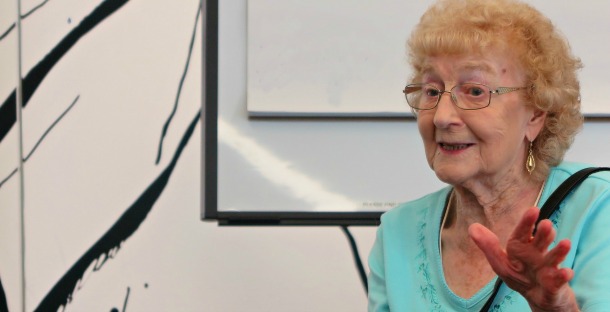
On the day we met Doreen, an older woman who had a fall 18 months ago, along with her son Andrew. She tripped over paving stones and luckily grabbed an artificial tree on the way down so “I didn’t fall on my face”. Not quite so luckily, she broke her femur and spent a couple of months in hospital.
“I do like my food,” said Doreen, but “you don’t get a lot of food in the hospital. I didn’t like their food but you have to eat it.”

Andrew told us she was always active — “24-7” — but after the accident, she spent a year not leaving the house. There were all kinds of gaps in the system: they weren’t referred to a dietician, didn’t get physio on the weekends. He did say the protein drinks helped, especially “if you can get your doctor to prescribe them.”
Now, a year and a half later, Doreen goes on the bus by herself and using a stick to walk (she zipped around the conference room quite adroitly). She’s still concentrating on eating right, with a few treats, naturally. “I do like my cake,” she confided, taking a slice of lemon drizzle to nibble at lunch.

About
BritMums is the UK’s original collective of lifestyle bloggers and digital influencers, fueling the country’s most influential social content. We lead the online conversation with members who are parent social influencers creating content on topics ranging from food, parenting, travel, politics, style and more.