

Rosanne Cobb
Here at BritMums we’ve been dreaming of going on African safari for several years. Rosanne Cobb, the safari expert and leader of the team at Abambo Travel, is here to make it easier than ever, with these money-saving tips for families. An ex-teacher, she is also founder of the Safari Awards and editor of the Good Safari Guide. Over to Rosanne:
Yes, safaris can be expensive
African safari lodges are amongst the most expensive places you can stay worldwide, where you will enjoy the world’s best service with some of the world’s best wildlife viewing. But that means that a safari can be quite expensive when you want to take the family.
What are your options for an African safari if you don’t fancy paddling yourself there with a tent on your back? The good news is, an African safari doesn’t have to break the bank. Here are my money-saving tips:

Picture courtesy Abambo
Tip 1: Exclusive-use accommodations
Booking by the room can often end up much more expensive than if you book an entire house for your own exclusive use. Once you’ve booked a house for your family, you can really do as you please, and the cost-per-head drops significantly. This flexibility is especially useful when you are going with extended family – it’s social and comfortable and you can squeeze in more people without the price following suit.

The more, the merrier. Booking a house for many can make more sense. Picture courtesy Abambo Travel
Tip 2: Deals, deals deals…
Africa is saturated with safari packages, overwhelmingly so, which is brilliant because all these competing lodges offer discounts. If you are a spontaneous type, you can get fab last-minute deals leaving within the next couple of months. But do beware, last-minute deals are much harder to come by during school holidays, and you may get stung on high flight costs if you leave it late to book.
Many lodges offer long-stay discounts, such as ‘3 nights for 2’ and ‘4 nights for 3’, along with ‘partner 50%’ deals. If the lodge you like doesn’t have a published long stay deal, it’s always worth asking. My team at Abambo frequently use our relationships to negotiate special rates.

While school holidays are more expensive, there are deals to be had. Picture courtesy of Abambo
Tip 3: Consider the exchange rate
In these turbulent times you could be reducing the cost of your African safari by up to 50% on a lucky day. South Africa is the obvious example right now, where you are getting over double for your pound or dollar than a few years ago (although many lodges are now charging in USD for stability). We can’t always predict currency fluctuations, but it is worth getting familiar with ZAR and USD trends.

Reducing the cost of this type of experience by 50%? Yes, please! Picture courtesy of Abambo
Tip 4: Go off-season
‘Green season’ or ’emerald season’ safaris take place during the rainy season, typically Nov – April (not including the Christmas period), but this varies greatly between countries. The green season is considered poor for game-viewing because animals disperse and the vegetation grows so thick and tall it hides the wildlife from view. However, whilst you are unlikely to see the cast of Lion King sharing a drink at a waterhole, you have a chance of seeing all sorts of newborns under huge, dramatic African skies. Once you’ve seen a baby elephant trying to work out how to use its trunk, you’d choose to travel in the green season every time!
Flights are cheaper in the green season, and usually there are no crowds. Just avoid the areas which shut up shop during this time (some spots in Kenya, Tanzania, Zambia), and you’re really onto a winner. In some places — for example the Kalahari in Botswana – you have more chance of seeing wildlife during this time than than the rest of the year.

Fancy seeing a baby elephant learning to use its trunk? Cheaper green-season safaris give you the chance. Picture courtesy of Abambo
Tip 5: Consider Mobile Camping
It’s not the kind of soggy camping you’ve experienced in the west of England, or whilst hiking the backcountry in the States. Your ensuite tent is furnished with hot showers; your private chef will arrange gourmet feasts for every meal, which are served on white tablecloths; you’ll have ice in your drinks for your sundowners, and you’ll sleep the sleep of the dead under your feather duvet.
Mobile camping is a great option for larger family groups, when it becomes the best value for money, and it’s the most flexible as you can tailor-make your entire itinerary and your campsite moves with you.

It’s sundowners on the go with mobile camping. Picture courtesy of Abambo
Tip 6: What’s in a name?
Everyone has heard of the Serengeti and the Kruger, and this notoriety keeps the prices elevated. Head for the less-well-known (and less busy!) wildlife reserves to remove the premium. Try Madikwe in South Africa, North Luangwa in Zambia, Lake Nukuru in Kenya. Look for smaller concessions which border the big parks: If they are unfenced you will enjoy the same wildlife but without the crowds.
Another perk of the private reserve is that they don’t need to stick to the rules and curfews of the national parks, because they don’t have the volume of tourists. Fewer guests means less environmental damage, and because you are always with a trained guide who is respectful of the environment, you have more freedom – for example the freedom to get out and walk or go on a night drive.

Guides on private reserves deal with fewer guests…and can make sure your experience is worthwhile and eco-conscious. Picture courtesy Abambo
Tip 7: Flight sales
Keep an eye on airline websites to jump on any sales the moment they’re announced. It can be hard to predict. For example, at Abambo we’re in close contact with the airlines and are always trying to get the lowdown on when to advise our guests to book flights, but the airlines often don’t know themselves when their prices will drop.
Here’s something that will help: Download the ‘Hopper’ app (screenshot below) and it will alert you when prices drop for the routes you are interested in.

Tip 8: Look out for new lodges
Lodges inevitably hike up prices when they become more popular, so catch them when they’re new. You can expect some of the top lodges charge in excess of £1700 per person per night.
Machaba Camp is the new kid on the block in Botswana’s fabulous Khwai area, but is very quickly proving to be the place to be. And at £650 per person per night in the high season, you’re getting a lot of luxury for a lot less. (Note: Africa outfitters tend to quote prices in US dollars; we have converted to pounds.)
Angama Mara is Kenya’s seriously luxury Mara option, and it’s owner-run, which we love. Angama is a very reasonable £965 peak season. Look out for Azura Selous in Tanzania, and Makanyi Private Game Lodge in South Africa too. And — hot off the press — keep a look-out for Norman Carr’s new luxury camp Mambeti in Zambia (Liuwa), due to open in 2017.

Machaba Camp provides a luxe experience for less
Tip 9: Use an expert tour operator
Mistakes when booking your family safari can be very expensive. You may think you’re talking the same language as the lodge if you’re booking direct, but invariably there are misunderstandings. Tour operators give advice that could save you thousands, are there if things go wrong, And their service is free. It’s a money-saving no-brainer, especially when you consider UK tour operators are insured up to the hilt in order to look after you and your hard-earned holiday savings.

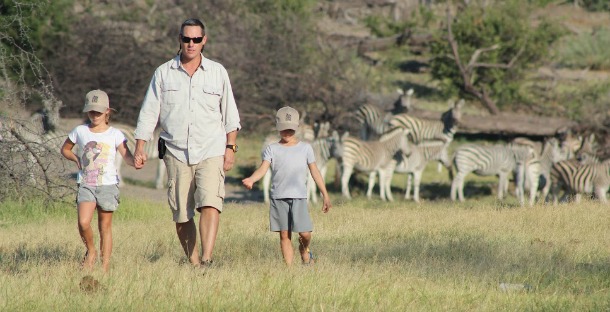
An expert tour operator can help make your safari experience seamless. Picture courtesy of Abambo
Planning a safari? Let us help you…
Abambo Travel, helps you put together a bespoke Africa experience to suit your family. They specialise in Africa and can answer any question you throw at them. Visit their site to explore what your family could do and see on safari. www.abambotravel.com

About
BritMums is the UK’s original collective of lifestyle bloggers and digital influencers, fueling the country’s most influential social content. We lead the online conversation with members who are parent social influencers creating content on topics ranging from food, parenting, travel, politics, style and more.